Merchants
Sales Agents
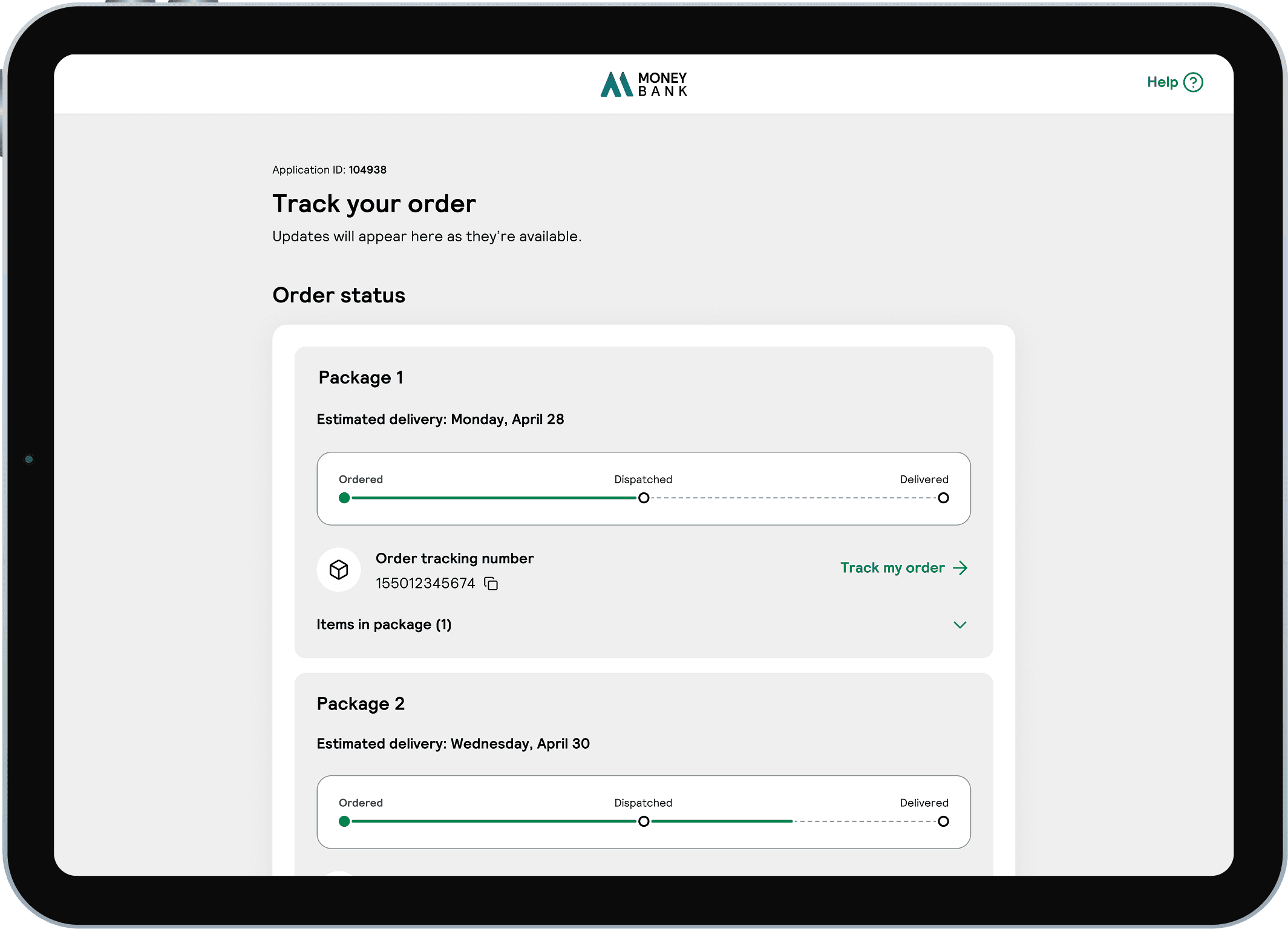
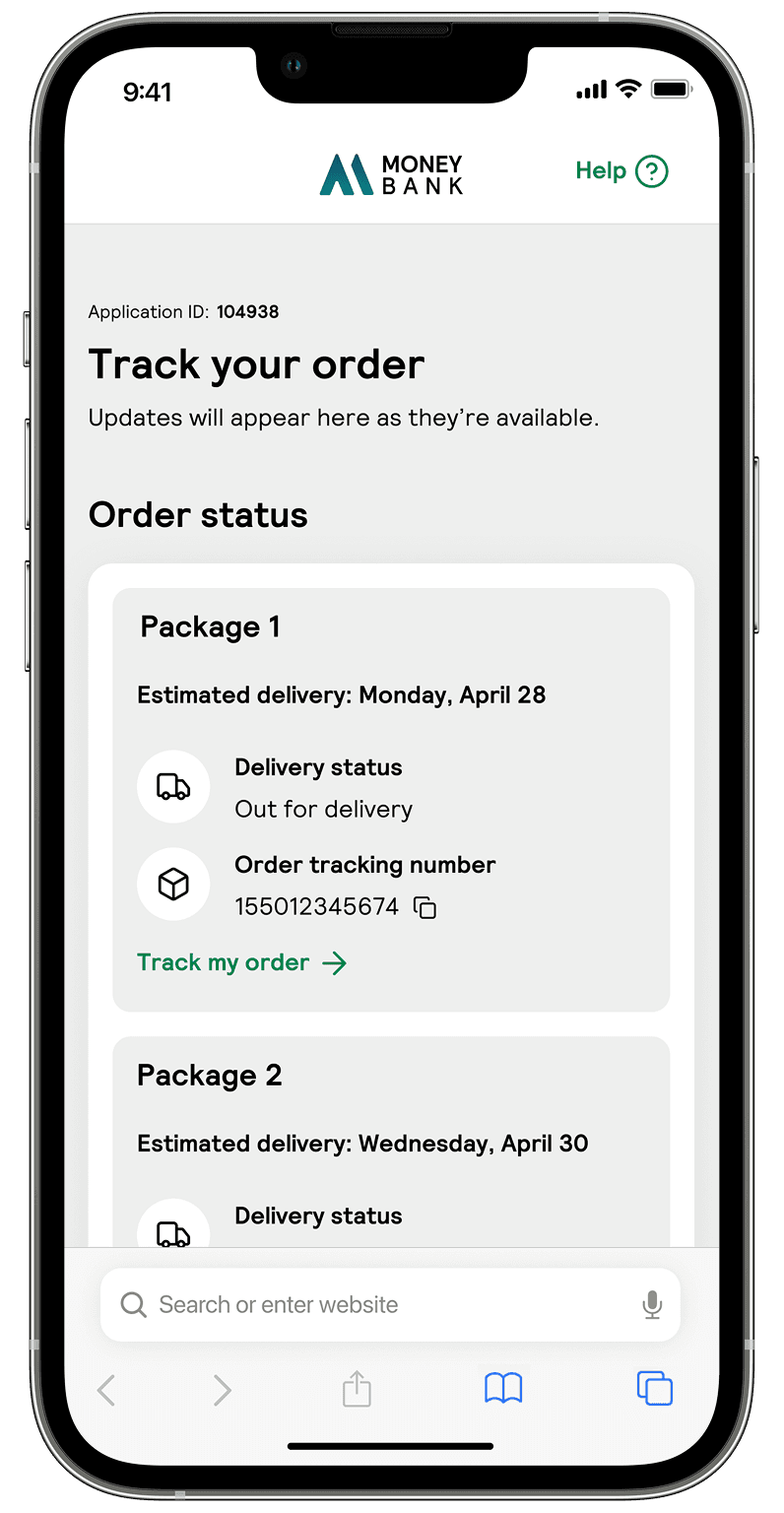
Designing a status tracking app to give merchants visibility into their orders
Designing a status tracking app to give merchants visibility into their orders
Giving merchants one place to track all their deliveries
Role
Role
Product Designer
Team
Team
Product managers, Data analyst
, Developers, Client banks
Product managers, Data analyst, Developers, Client banks
Tools
Tools
Figma, Confluence, Claude
Duration
Duration
2 months
about the company
What is Pollinate?
Pollinate is a fintech platform serving tier 1 banks and financial institutions. It provides a suite of configurable mini apps and merchant acquiring tools that enable banks to deliver seamless financial experiences to their merchants. Beyond customer-facing solutions, Pollinate also builds internal tools like sales agent, announcements, reporting and status tracking systems to help banks manage and support their merchant networks more effectively.
about the company
What is Pollinate?
Pollinate is a fintech platform serving tier 1 banks and financial institutions. It provides a suite of configurable mini apps and merchant acquiring tools that enable banks to deliver seamless financial experiences to their merchants. Beyond customer-facing solutions, Pollinate also builds internal tools like sales agent, announcements, reporting and status tracking systems to help banks manage and support their merchant networks more effectively.
about the company
What is Pollinate?
Pollinate is a fintech platform serving tier 1 banks and financial institutions. It provides a suite of configurable mini apps and merchant acquiring tools that enable banks to deliver seamless financial experiences to their merchants. Beyond customer-facing solutions, Pollinate also builds internal tools like sales agent, announcements, reporting and status tracking systems to help banks manage and support their merchant networks more effectively.

about the problem
Overview
Purchasing devices is a critical part of merchant onboarding. After purchase, merchants using Pollinate's banking solutions had no way to self-serve status updates on their courier deliveries. Instead, they were entirely dependent on email notifications or had to reach out directly to support for updates. This created friction, delayed merchant onboarding, and added unnecessary support burden on the bank's teams.
Overview
Purchasing devices is a critical part of merchant onboarding. After purchase, merchants using Pollinate's banking solutions had no way to self-serve status updates on their courier deliveries. Instead, they were entirely dependent on email notifications or had to reach out directly to support for updates. This created friction, delayed merchant onboarding, and added unnecessary support burden on the bank's teams.
about the problem
Overview
Purchasing devices is a critical part of merchant onboarding. After purchase, merchants using Pollinate's banking solutions had no way to self-serve status updates on their courier deliveries. Instead, they were entirely dependent on email notifications or had to reach out directly to support for updates. This created friction, delayed merchant onboarding, and added unnecessary support burden on the bank's teams.
The challenge
Understanding the problem
The real blocker emerged when we looked at activation devices. Banks were sharing activation codes via email an insecure, unsearchable, easy-to-lose method. Merchants couldn't easily find or verify these codes, and there was no connection between the physical device arriving in a courier shipment and the digital activation process. This meant merchants were stuck waiting for emails, searching their inboxes, or calling support just to get started. How might we give merchants a self-serve way to track their deliveries and access their activation codes in one place, without forcing them to leave the system?
The challenge
Understanding the problem
The real blocker emerged when we looked at activation devices. Banks were sharing activation codes via email an insecure, unsearchable, easy-to-lose method. Merchants couldn't easily find or verify these codes, and there was no connection between the physical device arriving in a courier shipment and the digital activation process. This meant merchants were stuck waiting for emails, searching their inboxes, or calling support just to get started. How might we give merchants a self-serve way to track their deliveries and access their activation codes in one place, without forcing them to leave the system?
The challenge
Understanding the problem
The real blocker emerged when we looked at activation devices. Banks were sharing activation codes via email an insecure, unsearchable, easy-to-lose method. Merchants couldn't easily find or verify these codes, and there was no connection between the physical device arriving in a courier shipment and the digital activation process. This meant merchants were stuck waiting for emails, searching their inboxes, or calling support just to get started. How might we give merchants a self-serve way to track their deliveries and access their activation codes in one place, without forcing them to leave the system?
Multi store problem
Multi-store merchants unable to distinguish which order belongs to which location.
Confusing email method
Traditional approach of updates through email was confusing considering multiple packages scenario.
Delivery address
Support teams fielding repetitive status enquiries
competitive analysis
Understanding the landscape
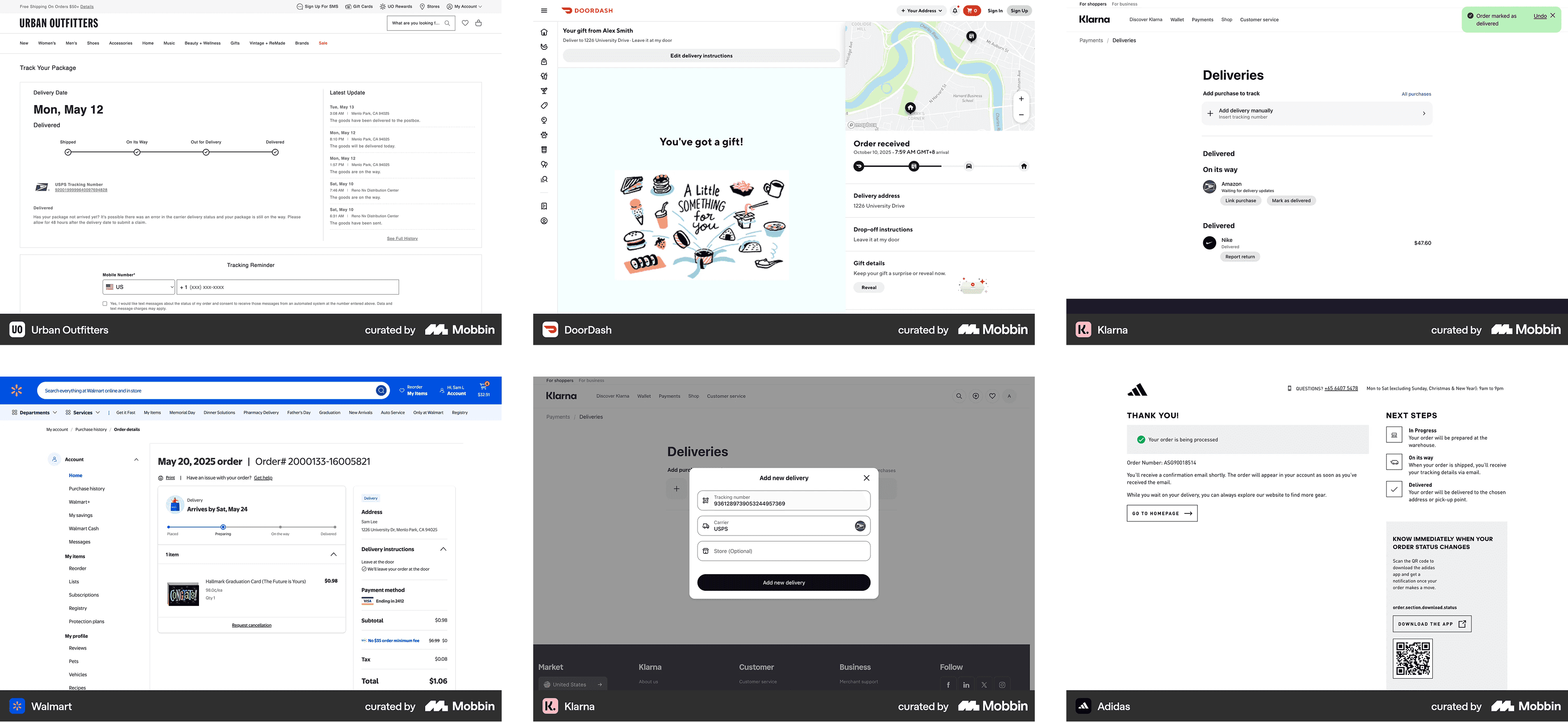
I started by analyzing how other platforms — from e-commerce to fintech to logistics — approached tracking and delivery experiences. I studied Urban Outfitters' package tracking, DoorDash's real-time delivery updates, Klarna's post-purchase experience, Walmart's order management, and Adidas' notification design. The pattern was clear: successful tracking experiences didn't just show status — they reduced anxiety through clarity, proactive communication, and actionable next steps. They gave merchants (or customers) confidence that their delivery was on track and they knew exactly what to expect.
competitive analysis
Understanding the landscape
I started by analyzing how other platforms — from e-commerce to fintech to logistics — approached tracking and delivery experiences. I studied Urban Outfitters' package tracking, DoorDash's real-time delivery updates, Klarna's post-purchase experience, Walmart's order management, and Adidas' notification design. The pattern was clear: successful tracking experiences didn't just show status — they reduced anxiety through clarity, proactive communication, and actionable next steps. They gave merchants (or customers) confidence that their delivery was on track and they knew exactly what to expect.
competitive analysis
Understanding the landscape
I started by analyzing how other platforms — from e-commerce to fintech to logistics — approached tracking and delivery experiences. I studied Urban Outfitters' package tracking, DoorDash's real-time delivery updates, Klarna's post-purchase experience, Walmart's order management, and Adidas' notification design. The pattern was clear: successful tracking experiences didn't just show status — they reduced anxiety through clarity, proactive communication, and actionable next steps. They gave merchants (or customers) confidence that their delivery was on track and they knew exactly what to expect.
Initial exploration
Discovering the multi-store complexity
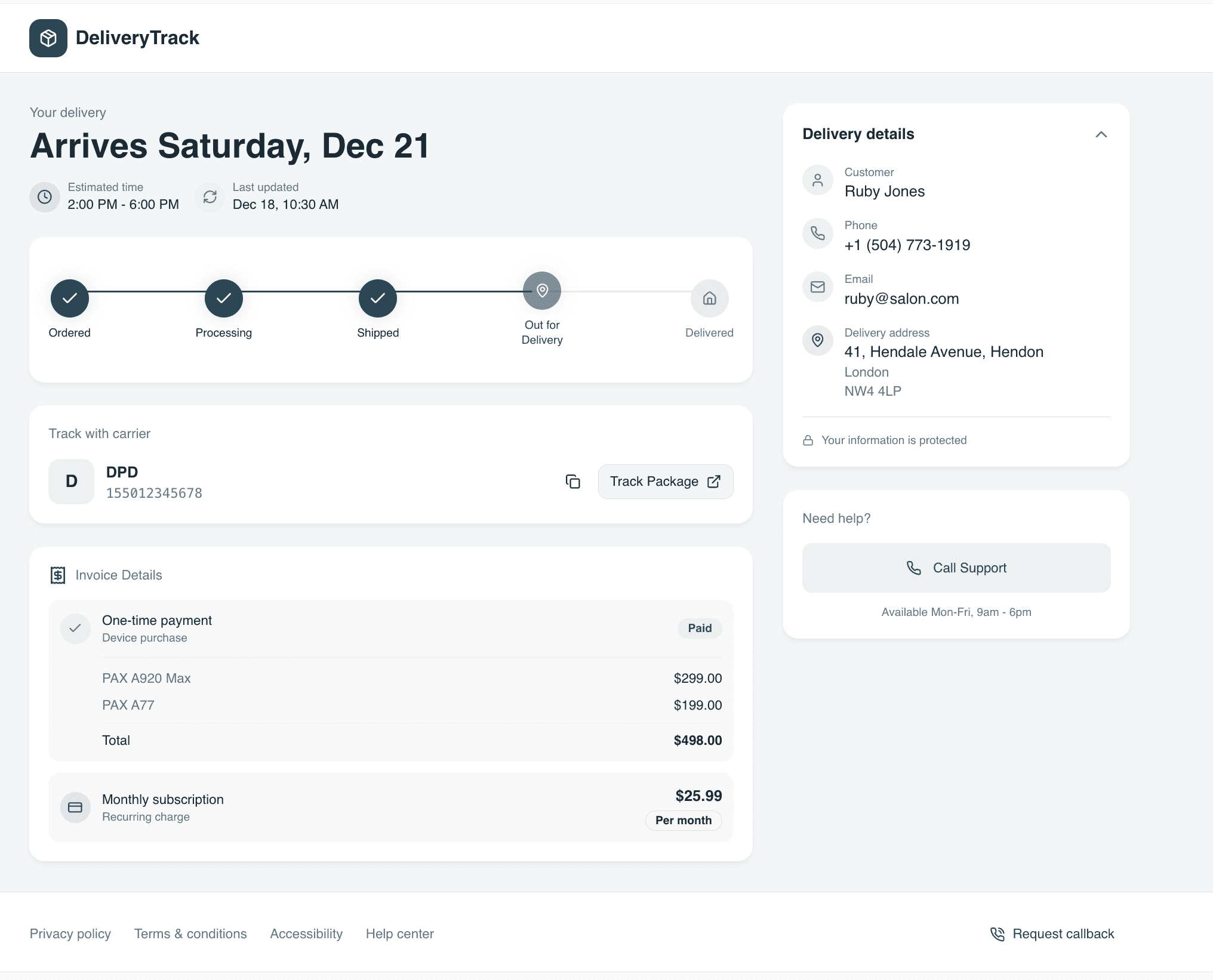
Earlier in the project, our initial assumption was simpler. We thought merchants would be tracking a single package per store location. I used Lovable to quickly get a first draft out, focusing on a straightforward status view for that single-package scenario. However, as we dug deeper into merchant behavior and tested assumptions with stakeholders, we realized the reality was much more complex. Merchants could have multiple stores receiving multiple packages simultaneously across different couriers. This fundamentally changed the design problem. We needed a structure that could handle that complexity without overwhelming merchants with information. This insight led us to pivot toward the nested card architecture anchored by store location.
Initial exploration
Discovering the multi-store complexity
Earlier in the project, our initial assumption was simpler. We thought merchants would be tracking a single package per store location. I used Lovable to quickly get a first draft out, focusing on a straightforward status view for that single-package scenario. However, as we dug deeper into merchant behavior and tested assumptions with stakeholders, we realized the reality was much more complex. Merchants could have multiple stores receiving multiple packages simultaneously across different couriers. This fundamentally changed the design problem. We needed a structure that could handle that complexity without overwhelming merchants with information. This insight led us to pivot toward the nested card architecture anchored by store location.
Initial exploration
Discovering the multi-store complexity
Earlier in the project, our initial assumption was simpler. We thought merchants would be tracking a single package per store location. I used Lovable to quickly get a first draft out, focusing on a straightforward status view for that single-package scenario. However, as we dug deeper into merchant behavior and tested assumptions with stakeholders, we realized the reality was much more complex. Merchants could have multiple stores receiving multiple packages simultaneously across different couriers. This fundamentally changed the design problem. We needed a structure that could handle that complexity without overwhelming merchants with information. This insight led us to pivot toward the nested card architecture anchored by store location.
Solving the multi-store problem
A card-based architecture anchored by store location
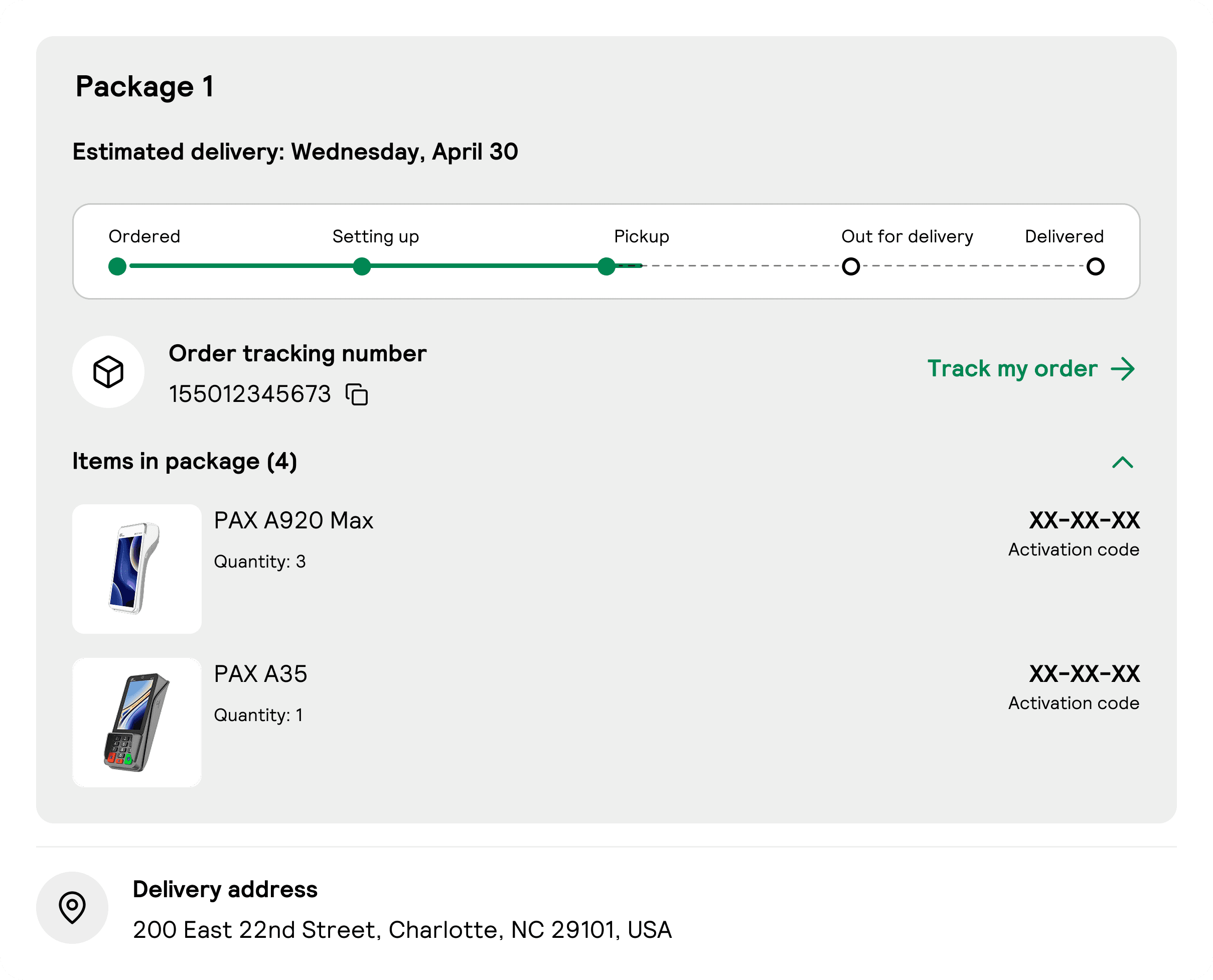
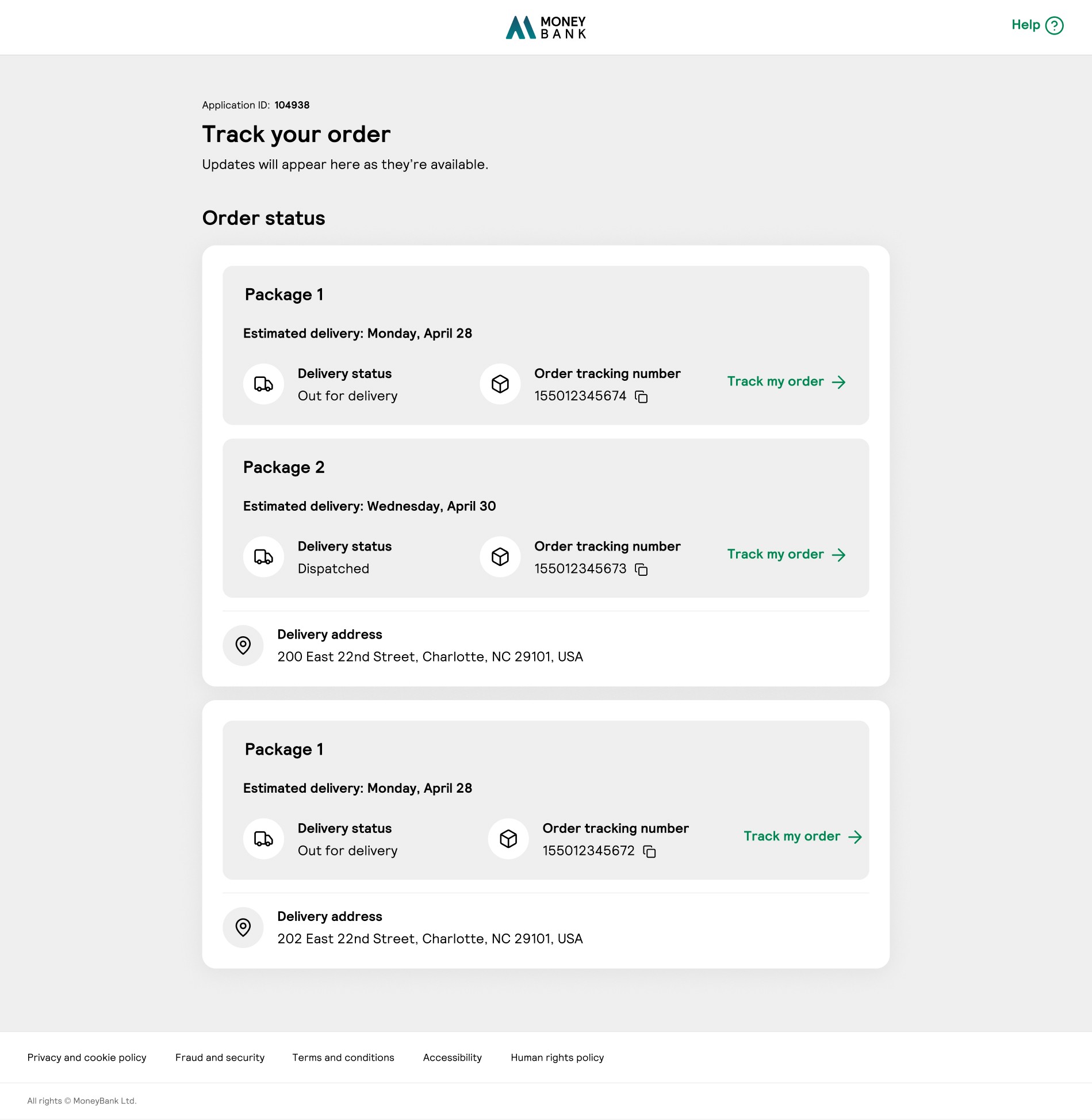
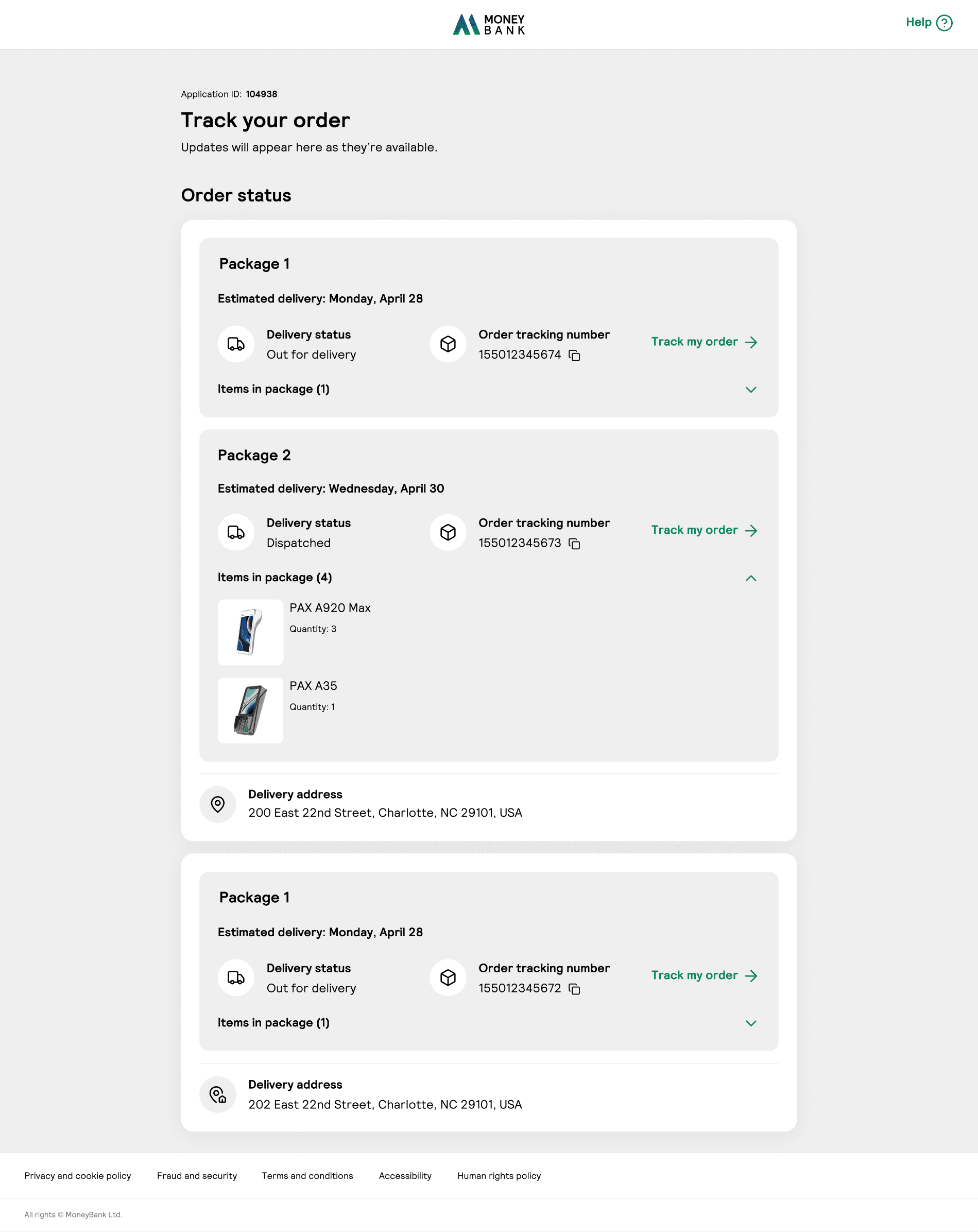
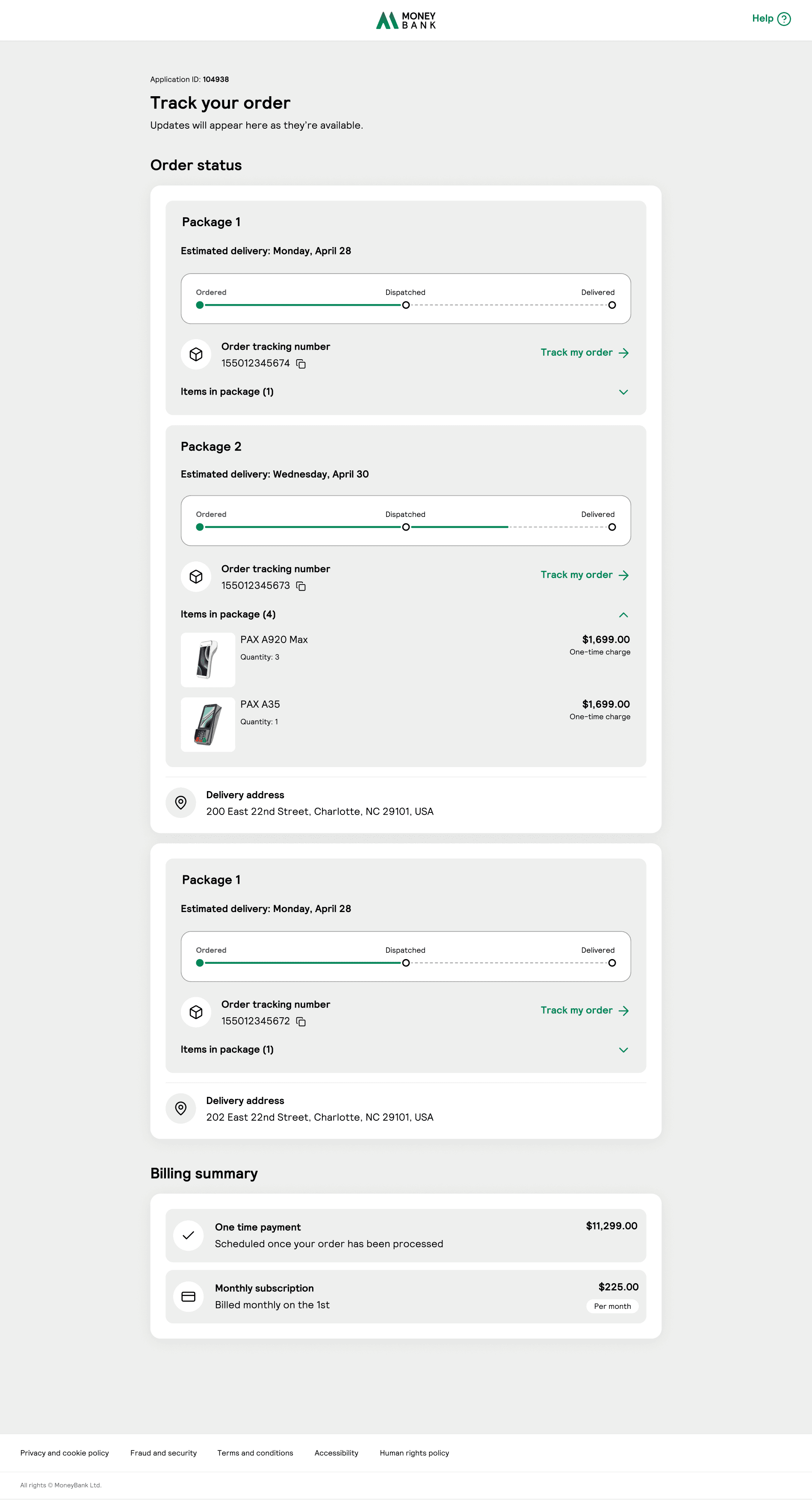
The core design decision was to anchor each card to a store location. Since merchants could have multiple stores receiving orders simultaneously across different couriers, this structure gave them immediate clarity on what was happening where. Each store card contained inner cards representing individual couriers because a single order could arrive across multiple shipments. This nested hierarchy reduced cognitive load: merchants could scan at a store level first, then drill into courier-level detail only when needed.
Solving the multi-store problem
A card-based architecture anchored by store location
The core design decision was to anchor each card to a store location. Since merchants could have multiple stores receiving orders simultaneously across different couriers, this structure gave them immediate clarity on what was happening where. Each store card contained inner cards representing individual couriers because a single order could arrive across multiple shipments. This nested hierarchy reduced cognitive load: merchants could scan at a store level first, then drill into courier-level detail only when needed.
Solving the multi-store problem
A card-based architecture anchored by store location
The core design decision was to anchor each card to a store location. Since merchants could have multiple stores receiving orders simultaneously across different couriers, this structure gave them immediate clarity on what was happening where. Each store card contained inner cards representing individual couriers because a single order could arrive across multiple shipments. This nested hierarchy reduced cognitive load: merchants could scan at a store level first, then drill into courier-level detail only when needed.
Final version
Iteration 1
Iteration 2
Final version
Iteration 1
Iteration 2
Final version
Iteration 1
Iteration 2
configuration options
A configurable but consistent experience
Within each courier card, merchants can view the delivery status, tracking number, items inside the package, total amount spent, and a direct link to the carrier's website for granular tracking. Critically, activation codes are now surfaced alongside the tracking data — tied to the actual shipment they're waiting for. What information appears is determined by the configuration agreed between the client bank and the courier partner, keeping the experience flexible across different markets.
configuration options
A configurable but consistent experience
Within each courier card, merchants can view the delivery status, tracking number, items inside the package, total amount spent, and a direct link to the carrier's website for granular tracking. Critically, activation codes are now surfaced alongside the tracking data — tied to the actual shipment they're waiting for. What information appears is determined by the configuration agreed between the client bank and the courier partner, keeping the experience flexible across different markets.
reducing dependence
FAQs and self-serve clarity
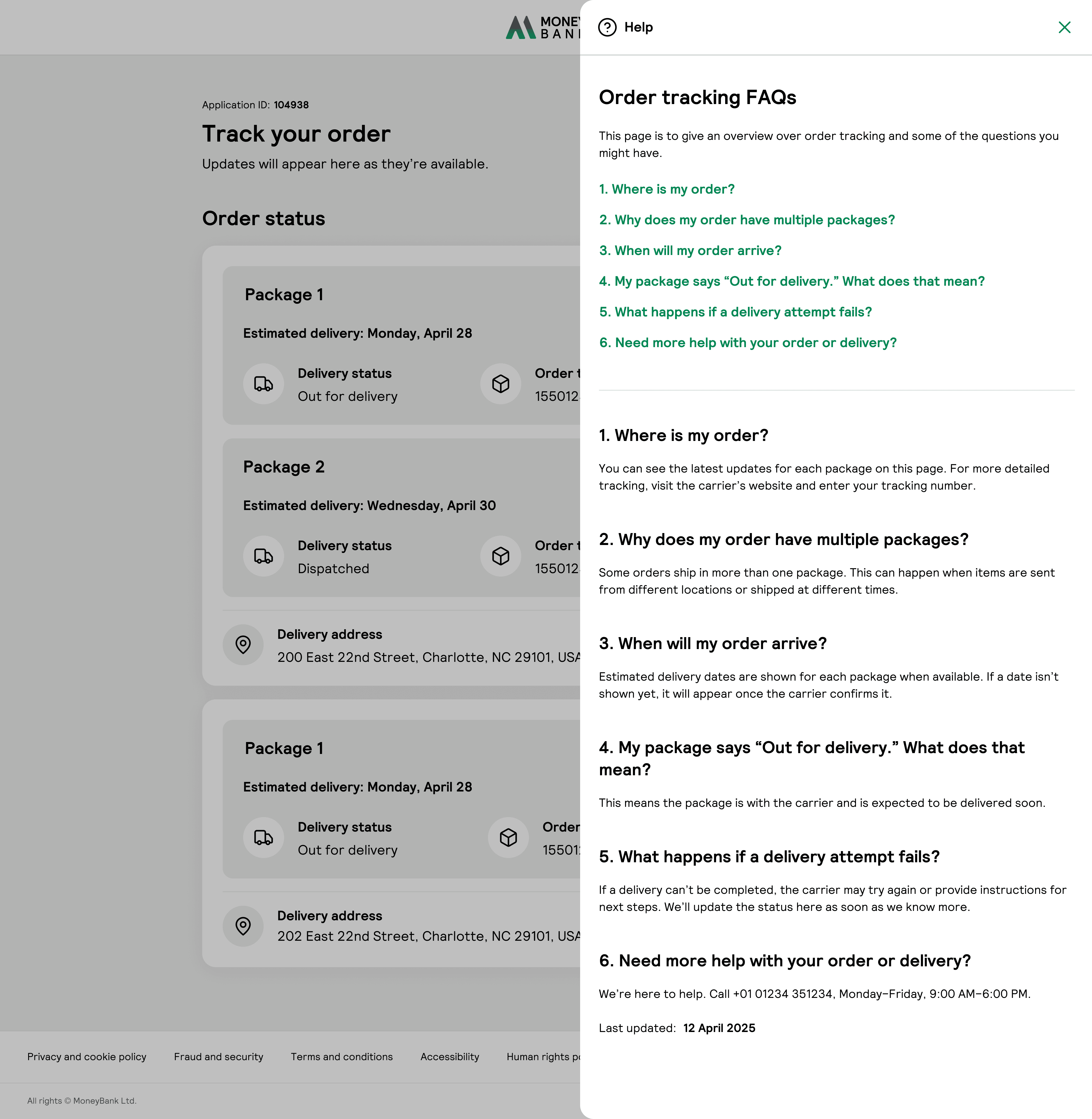
Rather than relying on email chains, we integrated FAQs directly into the tracking experience. This gave merchants instant answers to common questions about activation, delivery timelines, and next steps — reducing the need to contact support and creating a self-contained experience.
reducing dependence
FAQs and self-serve clarity
Rather than relying on email chains, we integrated FAQs directly into the tracking experience. This gave merchants instant answers to common questions about activation, delivery timelines, and next steps — reducing the need to contact support and creating a self-contained experience.
reducing dependence
FAQs and self-serve clarity
Rather than relying on email chains, we integrated FAQs directly into the tracking experience. This gave merchants instant answers to common questions about activation, delivery timelines, and next steps — reducing the need to contact support and creating a self-contained experience.
some important states
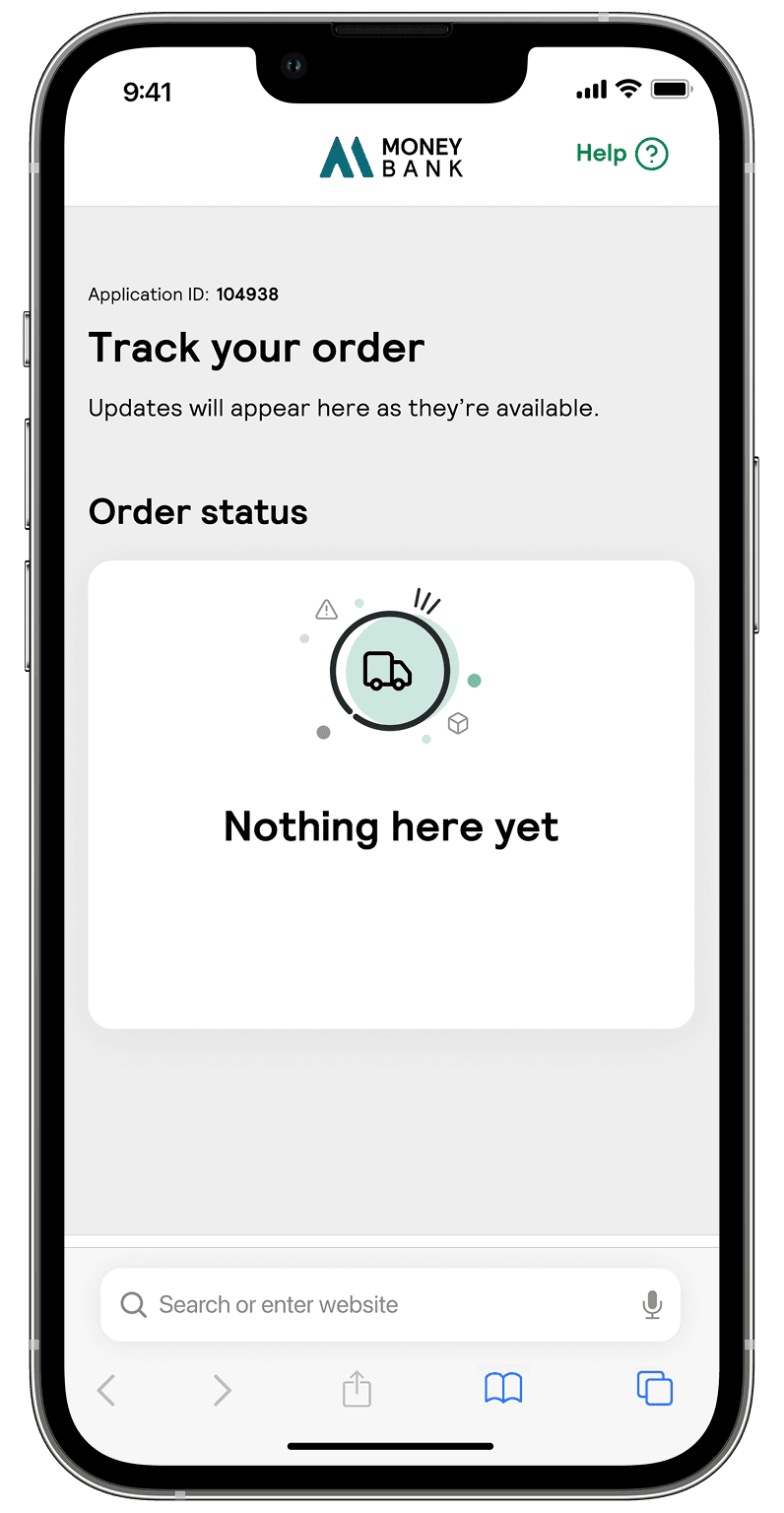
Error and No-odrer yet
some important states
Error and No-odrer yet
some important states
Error and No-odrer yet

Impact
Here is what we achieved
Impact
Here is what we achieved
Reduced merchant support enquiries by up to 35% as merchants could self-serve delivery status
Saved multi-store merchants up to 2 hours per week chasing delivery updates
Improved merchant onboarding speed by up to 25% by reducing delays caused by delivery uncertainty
Increased business revenue
Improved merchant onboarding speed by up to 25% by reducing delays caused by delivery uncertainty